Loading...
Serving Highland, CA and surrounding areas. (909) 737-6056
Your attic has gaps and thin spots that batt insulation misses. Blown-in insulation fills every corner so your home stays cooler in summer and your AC runs less.
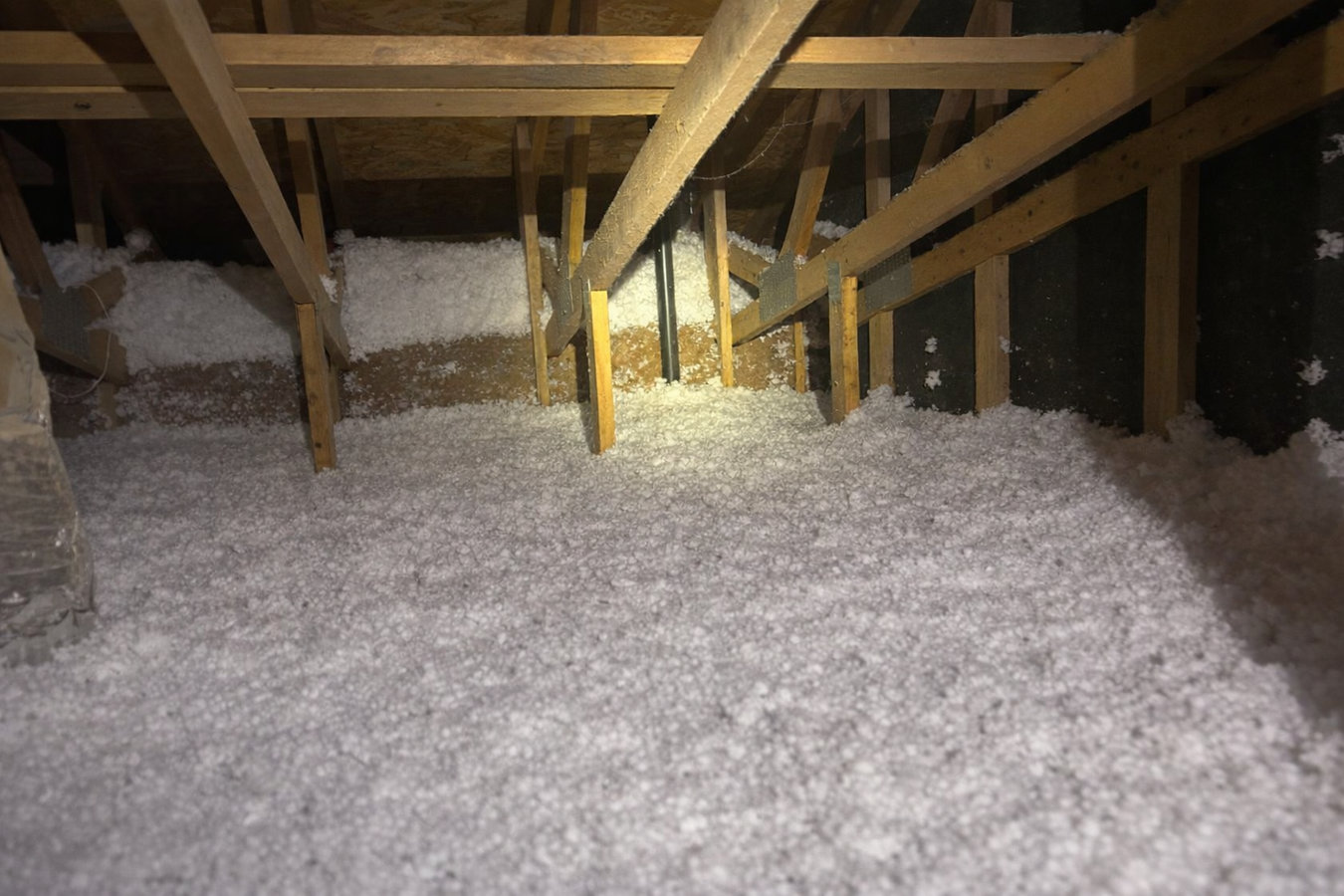
Blown-in insulation in Highland, CA is loose fiberglass or cellulose material blown through a hose into your attic or wall cavities, covering the entire surface including corners and edges that rigid batts never reach. Most attic jobs are finished in two to four hours with no need to leave your home.
If your home was built before 1990, what is already up there has likely settled and thinned well below what California now requires. Many Highland homeowners also find that blown-in work pairs naturally with home insulation upgrades that address walls and floors at the same time. The result is a home that holds its temperature instead of one where the AC battles the ceiling all day.
The U.S. Department of Energy recommends adding blown-in insulation as one of the most cost-effective upgrades a homeowner can make, particularly in hot-climate regions like the Inland Empire.
In Highland's triple-digit summers, a poorly insulated attic acts like a heat lamp pointed at your ceiling. If top-floor rooms never cool down no matter what you set the thermostat to, thin or missing attic insulation is almost certainly the reason. Waiting means paying for more cooling than you should all season long.
It is normal for cooling costs to rise in summer, but if your bill jumps by hundreds of dollars compared to spring, your home is working much harder than it should. Highland's extended heat season means an under-insulated home runs its AC almost continuously for months, and that shows up directly on your Southern California Edison statement.
If you peek into your attic and can see the wooden beams beneath the insulation, the coverage is too thin to do its job. You should see a consistent, deep layer that completely hides the structure below. Homes built in Highland before 1990 are especially likely to have this problem after decades of settling.
Light fixtures and ceiling fans are common places where attic air leaks into your living space. If you notice a musty smell or wildfire smoke odor puffing from a ceiling fixture during a windy day, air is moving from your attic into your home. That is both a comfort issue and an air quality concern during Highland's fire season.
Our blown-in insulation work covers attics, knee walls, and hard-to-reach cavities throughout your home. We use both fiberglass and cellulose depending on your attic conditions, current insulation levels, and what will perform best in Highland's hot, dry climate. Every attic job starts with air sealing around light fixtures, pipes, and framing gaps - because blown-in material alone will not stop warm air from sneaking in through those openings. If your project involves more than just the attic, we can coordinate with our wall insulation work to address the full envelope at once.
We also handle blown-in work as part of a larger home insulation project where attic, walls, and crawl spaces are all addressed together. That approach gives you the most complete coverage and the best chance of qualifying for a Southern California Edison rebate, since the combined R-value improvement tends to be larger.
Best for homes where the attic is thin, settled, or patchy - covers the entire floor including corners batts cannot reach.
Suited for older homes where exterior walls have little or no insulation - material is blown in through small access holes that get patched.
A good fit for homeowners who want recycled, fire-treated material with solid performance in Highland's dry climate.
Ideal where any incidental moisture is a concern - holds its R-value well over time without settling as much as cellulose.
Highland sits in the San Bernardino Valley where summer temperatures regularly exceed 100 degrees and heat radiates off the surrounding hillsides well into the evening. That sustained heat puts enormous pressure on an attic - without adequate coverage, your air conditioner is essentially fighting the ceiling all day. A significant portion of Highland's neighborhoods were built during the 1960s through 1980s, when insulation standards were far less demanding than they are today. If your home is in one of those older areas near downtown or closer to San Bernardino, there is a strong chance the attic insulation has settled and thinned over the decades.
Wildfire smoke and poor air quality are also real seasonal concerns in the Inland Empire. A well-insulated, properly air-sealed attic closes the pathways that let outdoor smoke drift into your living space through ceiling fixtures and gaps in the framing. Homeowners in East Highland Ranch and in communities like Redlands have found that doing both the blown-in work and air sealing together makes a noticeable difference during fire season. Highland is also served by Southern California Edison, which offers rebates for qualifying insulation upgrades - ask us whether your project qualifies before we start.
We will ask a few basic questions - your home size, age, and what has been bothering you. You will hear back within one business day to schedule your in-home assessment.
We go up into the attic and measure what is already there, check for gaps, and look for air sealing needs. This takes 20 to 40 minutes and we explain exactly what we find in plain terms.
You receive a written quote that breaks down scope, materials, and total cost before we touch anything. We also tell you upfront whether your project qualifies for a Southern California Edison rebate.
The machine runs outside or in your garage. Most Highland attic jobs finish in two to four hours. We show you the finished depth before we leave - no curing time, the insulation works immediately.
Free estimate, no pressure, written quote before any work starts.
(909) 737-6056We seal gaps around light fixtures, pipes, and framing before any material goes in. Skipping that step cuts the value of new insulation in half - we never skip it.
Our crews bring years of local experience to every attic in Highland. The work we do meets state energy code standards, which matters if you ever sell or refinance your home.
Before we leave, we walk you through the finished attic and show you the coverage depth. You have proof the job was done right - not just a promise. That documentation also supports any SCE rebate claim.
We know which Highland projects qualify for Southern California Edison rebates and what documentation they require. We handle that paperwork as part of the job so you are not navigating the utility program on your own.
Every one of these points reflects a real choice we make on every job. The ENERGY STAR Seal and Insulate program recommends the combined air sealing and insulation approach we use - it is the standard that gets real results, not just a number on paper.
Address your attic, walls, and crawl spaces together for the most complete coverage in one project.
Learn MorePair blown-in attic work with wall cavity insulation to stop heat transfer through every exterior surface.
Learn MoreSchedule your free estimate today - installation slots fill fast as temperatures climb.