
Loading...
Serving Highland, CA and surrounding areas. (909) 737-6056
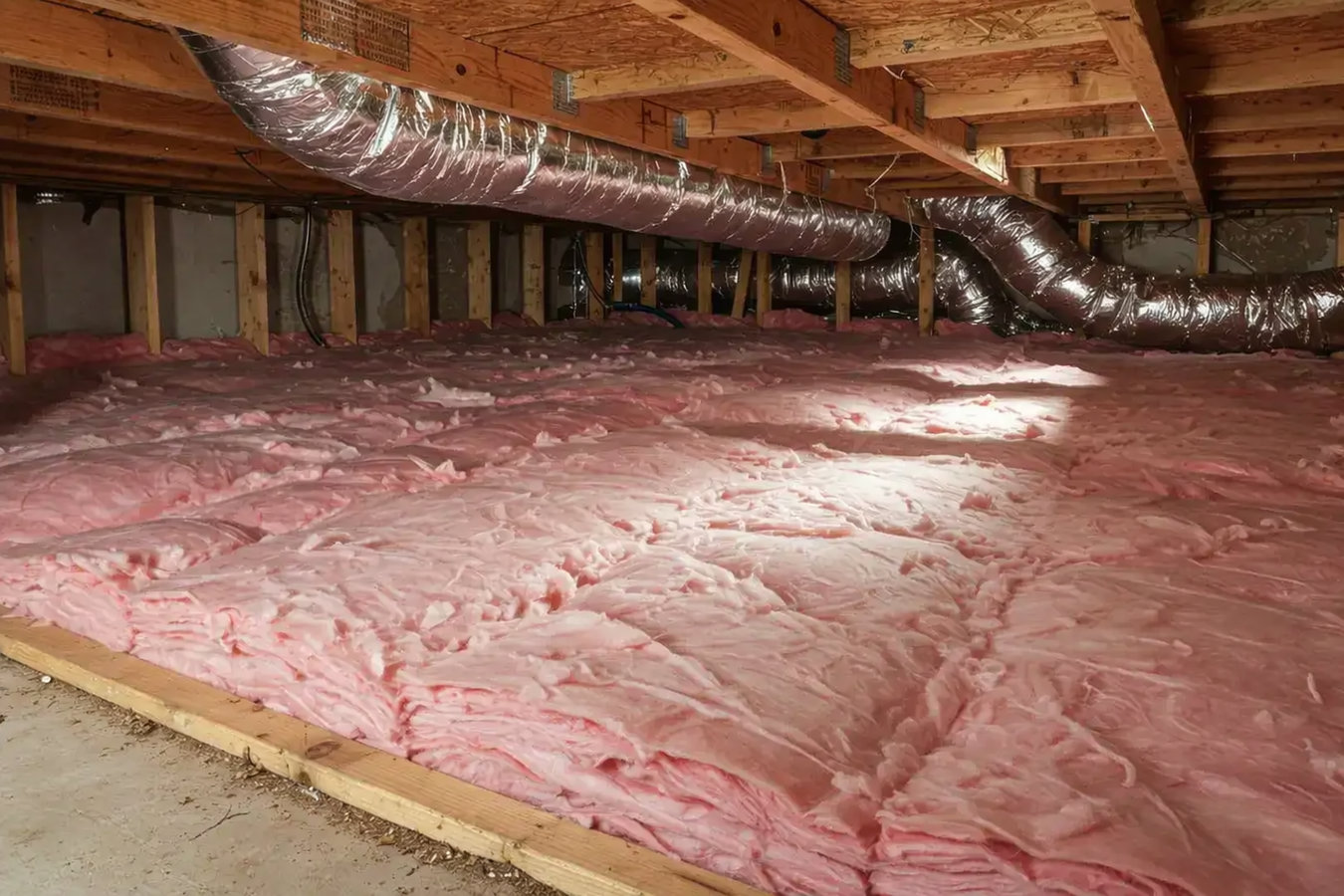
An uninsulated crawl space lets Highland heat pour up through your floors all summer and lets cold Santa Ana air in all winter. We fix that - with an honest inspection first and proper installation every time.
Crawl space insulation in Highland acts as a thermal barrier between the hot or cold ground beneath your home and the living spaces above it. Without it, your floors transfer outdoor temperatures directly into your rooms and your HVAC system works harder than it should. Most crawl space jobs take one to two days from start to finish.
Many homes in Highland were built in the 1960s through 1980s, when crawl space insulation standards were much lower than they are today. If your home is from that era and the crawl space has never been addressed, the insulation is likely minimal, deteriorated, or missing entirely. Temperatures above 100 degrees all summer and cold desert air pushing in during Santa Ana season mean your crawl space has been doing extra work for years. Adding a crawl space vapor barrier alongside the insulation can also control moisture - a combination we recommend for many Highland homes.
If you walk across your kitchen or hallway in the morning and the floor feels cold even when the heat is running, that cold is likely coming up from an uninsulated crawl space. In Highland, this is most pronounced during Santa Ana wind events, when dry, cold desert air finds its way under your home. This is one of the most common and easy-to-spot signs that your crawl space needs attention.
Highland's triple-digit summer temperatures put enormous pressure on home cooling systems. If your electricity bills are unusually high from June through September and your home still feels warm near the floor, heat is likely entering through an uninsulated crawl space. Addressing the crawl space is often one of the fastest ways to reduce that cooling load.
If you have peeked into your crawl space and seen pink or yellow material hanging down, bunched up, or lying on the ground, that insulation is no longer doing its job. Insulation that has fallen away from the floor joists provides almost no thermal benefit. This is a common condition in Highland homes built before 1990.
A persistent musty or earthy smell - especially in rooms near the back of the house or near the floor - can indicate moisture is entering through the crawl space and affecting your indoor air quality. In Highland, ground moisture combined with poor crawl space ventilation creates conditions where mold and mildew can develop. Insulation and vapor barrier work can address the root cause.
We offer two main approaches depending on your home's setup. The first is floor insulation - attaching batt or spray foam material to the underside of your subfloor between the joists. This is a solid solution for most Highland homes and is less disruptive than a full encapsulation. The second is full crawl space encapsulation, which seals the entire space: a thick moisture barrier on the ground, insulation on the crawl space walls, and sometimes conditioned air in the space itself. Encapsulation is more thorough and handles moisture at the same time, which matters in Highland's older housing stock. If the existing insulation needs to come out first, we handle that removal too - see our wall insulation page if you are also thinking about the rest of your home's envelope.
Before any material goes in, we inspect the crawl space for moisture, mold, pest damage, and the condition of any existing insulation. We also air-seal gaps around pipes, beams, and joists before installing anything, because insulation alone does not stop air movement. The North American Insulation Manufacturers Association recommends this pre-insulation air-sealing step as a best practice, and we follow it on every job.
Best for homes where the crawl space is dry and accessible, and the goal is straightforward thermal improvement under the floors.
Suits homes with irregular joist spacing or gaps where batt material would leave seams - foam expands to fill every corner.
Ideal for Highland homes with moisture concerns or where the crawl space has been a recurring source of pest or air quality problems.
For homes where the existing insulation has fallen, been contaminated, or degraded past the point of usefulness - we clear it and start fresh.
Highland sits in the Inland Empire, where summer temperatures regularly climb above 100 degrees - significantly hotter than coastal Southern California. That intense heat radiates through the ground and up through an uninsulated crawl space, making your air conditioner work overtime and driving up your electricity bill from June through September. Homeowners in Loma Linda and Colton deal with the same conditions, and we install crawl space insulation across all of these communities using the same local-climate approach.
Every fall and winter, the Santa Ana winds push cold desert air through every gap they can find. An uninsulated or poorly sealed crawl space becomes a direct pathway for that cold air to enter your home from below - and homeowners often notice their floors feeling cold and their heating bills spiking during Santa Ana events. Highland is also in a seismically active region, and some older homes here have crawl spaces that were modified after past earthquake retrofitting work, which can leave gaps or disrupt vapor barriers. A thorough inspection before installation catches these issues and ensures the finished job performs as expected. The U.S. Department of Energy recommends crawl space insulation as one of the highest-value weatherization upgrades for homes in hot climate zones.
We respond within one business day. We will ask a few basic questions about your home's age, size, and any problems you have noticed - so we can schedule an on-site estimate with the right information already in hand.
We access your crawl space through the exterior hatch or interior access point, check the condition of any existing insulation, look for moisture or pest damage, and measure the space. After the inspection, we walk you through what we found and give you a written estimate that explains exactly what we are recommending and why.
The crew arrives with materials and equipment and works entirely under your house. You do not need to move furniture or vacate rooms. You will hear some noise from staple guns or spray equipment, but your daily routine stays largely undisturbed. Most jobs are completed in a single day.
When the work is done, we walk you through what was installed and show you photos from inside the crawl space if you want them. If a San Bernardino County permit was pulled for the job, we handle scheduling the county inspection - you typically do not need to be present.
We inspect first, then give you a written quote. No pressure, no guesswork - just an honest look at what your crawl space actually needs.
(909) 737-6056We do not give estimates based on square footage alone. Every job starts with someone going into your crawl space to see what is actually there - moisture, pest damage, fallen insulation, or disrupted vapor barriers from past work. That visit is what makes the estimate accurate and the recommendation honest.
Highland is in unincorporated San Bernardino County, which means permits and inspections go through the county rather than a city building department. We know when a permit is required for crawl space work and handle the paperwork - so you are protected and the job is documented. A contractor who does not even ask about permits is a warning sign.
Insulation alone does not stop air movement. Before we install anything, we seal gaps around pipes, beams, and joists in your crawl space. This step is often skipped by contractors looking to move fast, but it makes a real difference in how well the insulation performs over time - especially during Highland's Santa Ana wind season.
Whether your home is in the newer neighborhoods of East Highland Ranch or in one of the older streets closer to Base Line, we have worked on crawl spaces throughout the city. We know how homes in this area were built and what conditions we are likely to find underneath them.
We will not install anything until we are confident the crawl space is dry, clean, and ready. The goal is a result that holds up for years - not a quick fix that creates a bigger repair bill later.
Once the crawl space is handled, wall insulation is the next step to stopping heat from entering through your home's sides - especially important in Highland's older single-story homes.
Learn MorePaired with insulation, a vapor barrier on the crawl space floor blocks ground moisture before it can affect your floors or indoor air quality.
Learn MoreEvery month you wait is another month your AC is doing extra work. Call us or request a free estimate online and we will have someone out to look within the week.